- Home
- Businesses
- Tomislav Kenfelja – Improving Online…
Worth knowing
Tomislav Kenfelja – Improving Online Visibility for Small Businesses
Why good work is no longer enough, and how a systematic approach can turn Google searches into a steady stream of local customers.

Why good work is no longer enough for customers to find you
You can offer the best service in town, have decades of experience and plenty of happy clients, but a new customer doesn't know that. If they can't find you when they need the service, your quality won't even come into consideration. Instead, they will contact the business that showed up first and immediately inspired trust.
How customers choose local trades and services today
Recommendations from friends still matter, but they are often only the start of the search. The customer then searches on Google, compares several providers and looks at photos, reviews, location and how clear the available information is.
The decision is often made within minutes, especially when the need is urgent. The advantage goes to trades and local businesses where the customer can quickly tell:
- whether they offer the service they need
- whether they work in their area
- whether they seem active and reliable
- how to contact them right away
That is why marketing for local businesses is not reserved for big budgets. Its job is to make good work visible to people who are already looking for it.
What you lose when your competitors are more visible on Google
You don't just lose a click — you lose an enquiry, a call and potentially a long-term client. A more visible competitor with an average service can regularly get more opportunities than an excellent business that is hard to find.
Over time, this turns into fewer recommendations, slower growth and greater dependence on existing customers. Quality keeps clients, but visibility is what brings them to you in the first place.
Your Google Business Profile: the shortest route to local customers
A Google Business Profile lets a trade or local business appear exactly when a potential customer is searching for a particular service nearby. A well-maintained profile gives the key information without any extra searching and makes it easy to call, send an enquiry or visit the location.
Optimising your details, categories, services and photos
Your business name, address, phone number and opening hours must be accurate and match the details on your website. It is important to choose a precise primary category, add relevant services and write a clear description of the business.
A profile is further improved by:
- authentic photos of the premises, the team and completed work
- listing the areas you serve
- special opening hours for public holidays
- direct links for booking or contact
Reviews that build trust and influence the customer's decision
Customers often compare ratings, the number of reviews and how the owner responds to them. So it is worth politely asking satisfied clients for an honest review, without offering a reward. Every review should get a professional reply, including critical ones, because future customers are watching how the business treats its clients.
Regular posts and updates that keep your profile active
Posts about new services, offers, changed opening hours or completed projects show that the business is active. A consistent rhythm is enough, for example a few useful updates a month. For more systematic management of your profile and local presence, explore marketing for local businesses.
The most common mistakes that keep a local business unnoticed
Incomplete or inaccurate information online
A wrong phone number, outdated opening hours or an incorrect location are enough for a potential customer to choose a competitor. It is particularly important to check your details regularly after moving, changing your opening hours or introducing new services.
Check that the following are clearly stated:
- business name, address and phone number
- current opening hours
- a description of services and the area you cover
- good-quality photos of the premises, products or team
Ignoring reviews and questions from potential customers
Reviews are not just ratings; they are a public indicator of how you treat customers. An unanswered negative review can leave a bad impression, while a polite and specific reply shows professionalism.
Reply to positive comments too, and check regularly for new questions. A short reply today could mean a booking, a call or a visit tomorrow.
Inconsistent details on your website, social media and Google
If your website lists one address, your social media another, and Google shows old opening hours, customers and search engines get mixed signals. Your business name, contact details and description of activities should be consistent across all channels.
Checking all your profiles from time to time prevents small errors that directly reduce your visibility. If you want to put your online presence in order systematically, find out more about marketing for local businesses.
What working together looks like
Reviewing your current online presence and local competitors
Working together starts with a look at what potential customers see when they search for your service. Tomislav Kenfelja checks your Google Business Profile, website, local search results, reviews and the consistency of your business details. Local competitors are analysed too, to see where there is room for better visibility.
Setting priorities and making concrete improvements
After the review, you get a clear plan without unnecessary jargon. Priority goes to the tasks that can bring the greatest benefit given your budget, location and business goals.
Improvements may include:
- editing business details, categories and descriptions
- adding good-quality photos and content
- better presentation of your services and service area
- a simpler path from a Google search to a call or enquiry
The aim is not to do everything at once, but to tackle first what most influences the customer's decision.
Tracking calls, clicks, enquiries and other key results
Results are tracked through indicators with real business value: the number of calls, website clicks, direction requests, messages and specific enquiries. Based on this data, the plan is adjusted and the next steps are set according to what works.
If you want a practical approach tailored to a small business, find out more about marketing for local businesses.
Also worth reading
Business profile
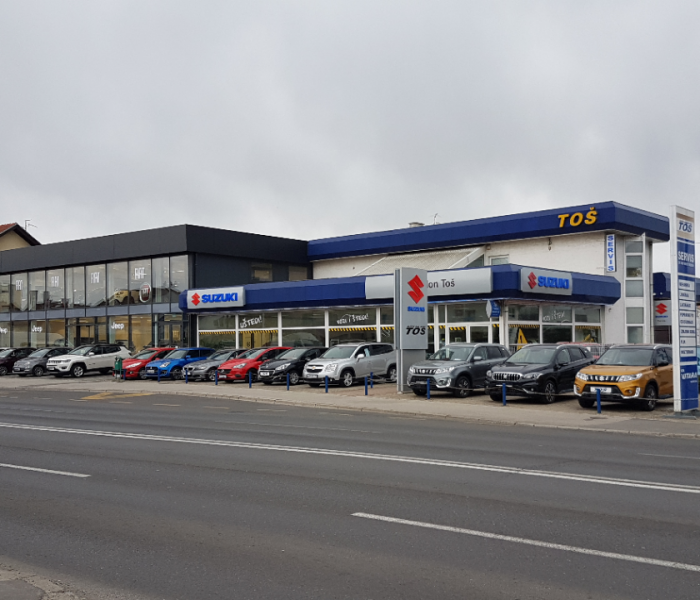
Auto Salon Toš: Suzuki, Fiat and Jeep in Sesvete since 1990
A showroom and authorised service centre at the same address, with more than 35 years on Zagrebačka Street. A new car, a used car and regular maintenance, all in one…

Business profile
Missing a Tooth? Prosthetic Solutions at the Čeović Dental Practice in Malešnica, Zagreb
Crown, bridge, denture or implant — the choice depends on how many teeth are missing and the condition of those that remain. At the Čeović practice, treatment is planned…

Worth knowing
Alarm Centar – Almost 30 Years of Keeping Your Home Safe
Experience, expert assessment and complete property protection, backed by three decades of reliable work in Croatia and Germany.